
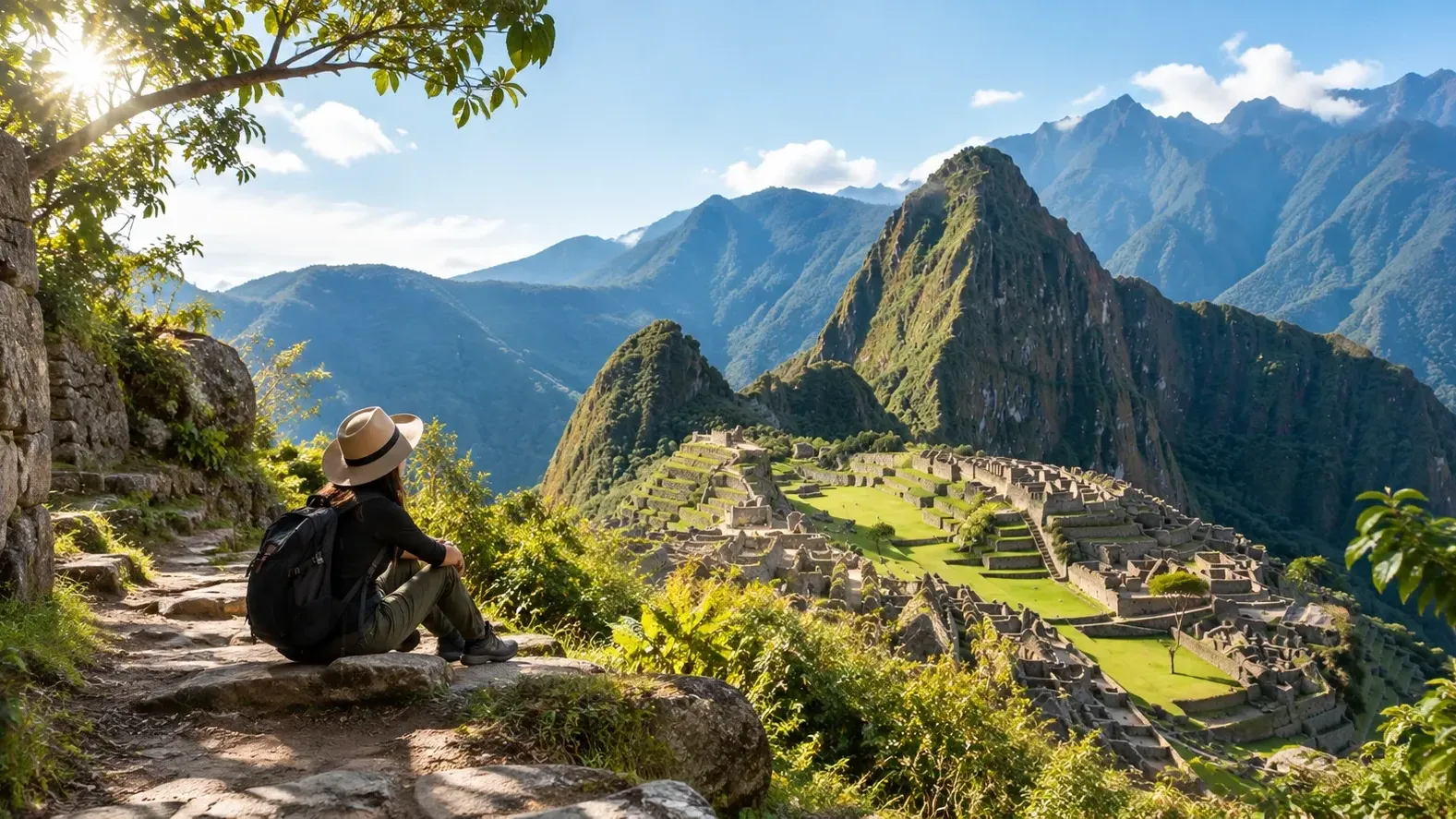
Why Most Visitors See Only a Fraction
Machu Picchu covers 13,000 hectares total, though only about 50 hectares comprise the main archaeological complex with structures and terraces. Of that, perhaps 5 hectares fall along the principal tourist circuit. The site's management divides access into three walking circuits designed to distribute crowds and preserve different areas. Circuit 1 covers the central temples, Main Temple, and upper plaza. Circuit 2 extends to agricultural terraces and the Group of Three Doorways. Circuit 3 reaches the Inca Bridge and more remote residential areas. Most tour groups book only Circuit 1, spending an average of 2 to 3 hours total. Those with time and curiosity can book multiple circuits or full-day access, revealing an entirely different dimension of the site.
The Residential Terraces: Where Ordinary Inca Lived
Beyond the ceremonial temples, scattered across the upper slopes are dozens of small stone structures: residential spaces for the workers and lower-ranking officials who inhabited Machu Picchu. These are not grand; they are modest, compact buildings with precisely cut stone walls, narrow doorways, and floor areas suggesting single-family occupation. Standing in one of these homes offers an intimate understanding of daily life that the imposing temples cannot convey. You see where families slept, where they stored food, where they worked. The views from each residence extend across the valley, suggesting even workers at Machu Picchu enjoyed extraordinary beauty in their ordinary routines. Few tour groups reach these areas.
The Inca Bridge: Engineering Marvel Few Notice
On the eastern slope of Machu Picchu, beneath steep cliffs, lies a structure that appears at first glance to be a simple access point but reveals itself as an architectural marvel. The Inca Bridge consists of stones cantilevered from a cliff face, creating a narrow walkway across an otherwise impossible gap. The bridge leads to an elevated structure believed to have been a checkpoint or gatehouse. The trail to reach it winds through steep terrain, and crowds there number in the low dozens rather than hundreds. Standing on the Inca Bridge with the city visible above and the gorge far below produces a different relationship with Machu Picchu than viewing it from the famous platform. You are not observing the citadel; you are part of its landscape.
Agricultural Terraces: Understanding Inca Farming at Altitude
Machu Picchu's lower levels feature an extraordinary system of agricultural terraces, some of the finest examples of Inca engineering for food production. These were not ornamental; they grew potatoes, quinoa, and maize in a location where altitude, slope, and climate made cultivation seemingly impossible. The Inca solved the challenge through precise drainage, soil engineering, and terrace design that remains functional today. Walking these terraces reveals an Inca concern that existed alongside spirituality and warfare: hunger. Feeding a mountain citadel required genius, and that genius is on display in every carefully constructed shelf of earth and stone.
The Group of Three Doorways: Sacred Symbolism
In the southeastern section of Machu Picchu stands a structure known as the Group of Three Doorways, three rectangular openings in a substantial stone building. This structure's purpose remains debated among archaeologists. Some hypothesize it was residential. Others suggest it held ritual significance, with the three doorways representing stages of Inca spiritual cosmology. The abundance of niches in the walls suggests it may have held valuable objects or figurines. What is certain is that the craftsmanship is exceptional, and the quiet quality of the space invites contemplation. Standing there, surrounded by cut stone and open sky with few other visitors, invites the kind of wondering and imagining that the crowded central plazas cannot.
Reaching Hidden Areas: Circuit Options and Time
To access hidden corners, book full-day entry (not a morning-only ticket) and specifically request Circuit 2 or Circuit 3 access. Standard tours often include only Circuit 1. Allow six to eight hours for a comprehensive exploration that includes both main temples and remote areas. Wear comfortable hiking boots; some paths are steep and rocky. Bring water: there is no source within the citadel. A map provided at entry helps, though having a guide is invaluable for understanding what you are looking at. Start early: this distributes your time across the full day and positions you in quieter areas while crowds are still concentrated in the center.
Frequently Asked Questions
Is it safe to explore alone in remote areas of Machu Picchu? The site is patrolled, and trails are marked. Exploring alone is safe. However, a guide enriches interpretation considerably.
Do I need special climbing equipment for hidden areas? No. All areas open to tourists are accessible via marked trails requiring only standard hiking capability and comfort at altitude.
How much more time is needed beyond a standard tour? A standard tour is 2 to 3 hours. Full exploration of hidden areas adds 3 to 4 more hours, totaling 6 to 7 hours.