
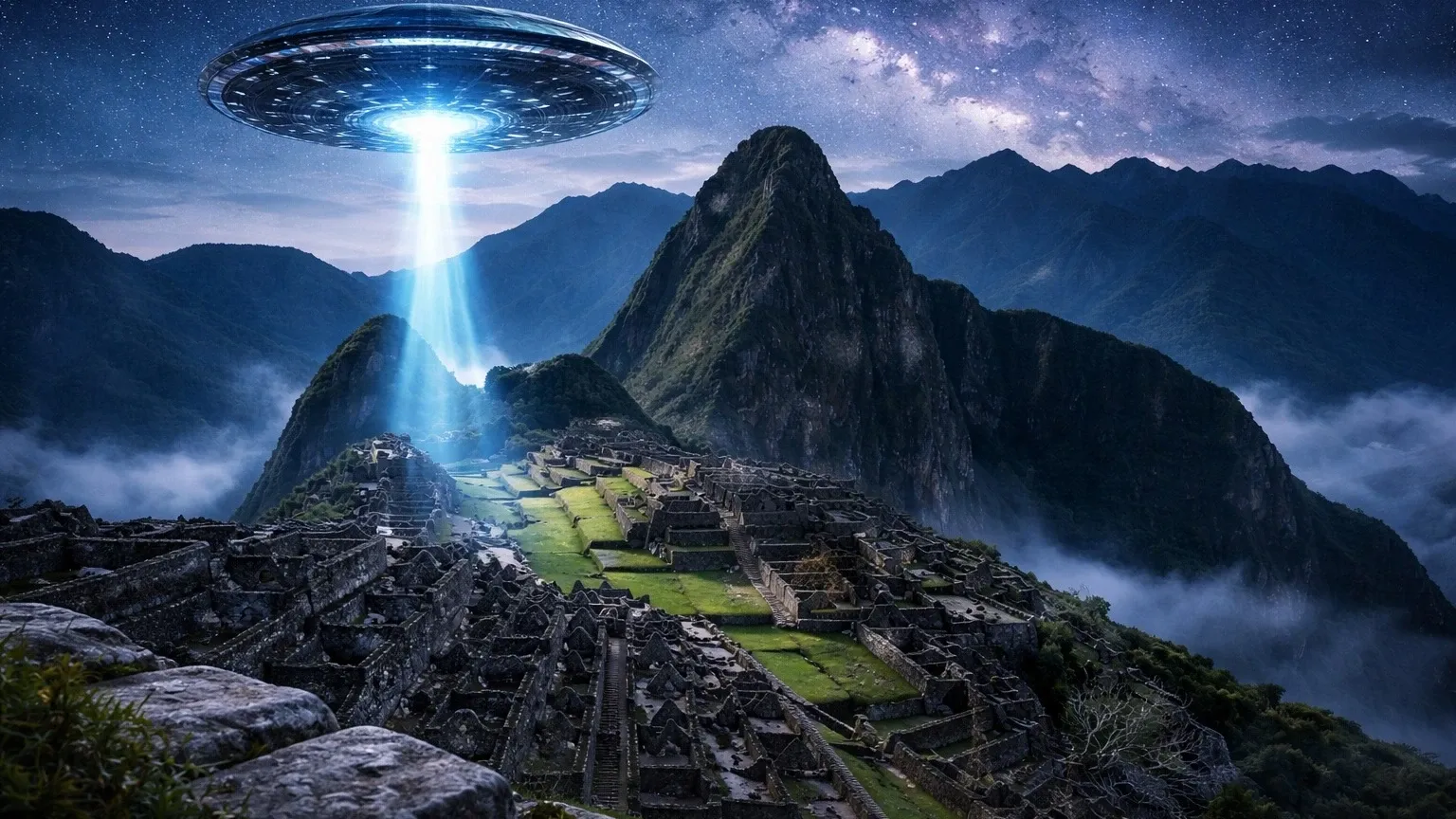
Few places on Earth spark the imagination quite like Machu Picchu. Perched high in the Andes, wrapped in mist, and built with astonishing precision, the ancient city has inspired wonder for generations. It is also the reason a provocative question keeps resurfacing online and in pop culture: Was Machu Picchu built by aliens?
The short answer is no. The long answer is far more fascinating.
Where the Alien Theory Comes From
The idea that extraterrestrials built Machu Picchu did not originate in Peru or in academic research. It emerged in the mid-20th century, fueled by a mix of science fiction, early pseudo-archaeology books, and later amplified by television shows and internet forums.
For many viewers unfamiliar with Inca history, the city’s location and stonework seem almost impossible to explain. Massive blocks fit together so precisely that no mortar was needed. The city sits on a seismic fault line, yet has endured earthquakes for centuries. To some, these facts feel easier to explain with aliens than with ancient humans.
But this says more about modern assumptions than about the past.
The Stonework That Started the Mystery
One of the main reasons Machu Picchu is linked to alien myths is its extraordinary masonry. The Incas shaped stones with such precision that even today it is difficult to slide a blade of grass between them.
This technique, known as ashlar masonry, was achieved using time, skill, and an intimate understanding of stone. The Incas worked with harder stones to shape softer ones, using sand and water for abrasion. It was labor-intensive, not supernatural.
What often gets overlooked is that this knowledge was accumulated over generations. Machu Picchu represents the peak of Inca engineering, not an isolated miracle.
Why the Location Feels “Impossible”
Another argument often cited is the city’s dramatic location. Why build a major site on a steep mountain ridge, surrounded by cliffs and clouds?
For the Incas, this choice made perfect sense. Mountains were sacred beings, known as apus, and geography carried spiritual meaning. Machu Picchu was likely designed as a royal estate or ceremonial center, intentionally placed between peaks, rivers, and the sky.
What seems impractical to modern eyes was deeply symbolic and strategic in the Andean worldview.
Ancient Knowledge, Not Ancient Aliens
The Incas were master engineers, astronomers, and environmental planners. Machu Picchu includes sophisticated drainage systems, agricultural terraces designed to prevent erosion, and astronomical alignments connected to the sun and seasonal cycles.
None of this requires extraterrestrial explanation. It requires acknowledging that ancient civilizations possessed advanced knowledge adapted to their environment, even without modern technology.
The alien theory often underestimates Indigenous ingenuity, replacing real human achievement with fantasy.
Why the Myth Persists Today
The idea of aliens building Machu Picchu persists because it is entertaining, mysterious, and easy to share. In the age of viral content, sensational explanations travel faster than nuanced history.
There is also a deeper reason. Machu Picchu evokes awe. When people encounter something that feels larger than themselves, they search for extraordinary explanations. The site feels otherworldly not because it came from another planet, but because it reflects a worldview very different from our own.
The Real Wonder Is Human
Understanding Machu Picchu through the lens of Inca culture does not make it less impressive. It makes it more so.
This city was built by humans who understood stone, water, astronomy, and landscape at an extraordinary level. They worked without iron tools, wheels, or written language, yet created a place that continues to inspire disbelief centuries later.
That is the true mystery worth appreciating.
A Place That Invites Questions
Machu Picchu does not need alien builders to justify its greatness. Its power lies in how it invites questions, reflection, and humility. It challenges modern travelers to reconsider what ancient societies were capable of and how much knowledge can be lost or misunderstood over time.
For travelers who stand among its terraces at sunrise, the feeling is often the same. Not that aliens were here, but that humans, deeply connected to nature and the cosmos, achieved something timeless.
In the end, Machu Picchu remains one of the world’s great wonders not because it defies explanation, but because the truth behind it is so extraordinary.