
Huayna Picchu: The Famous Peak
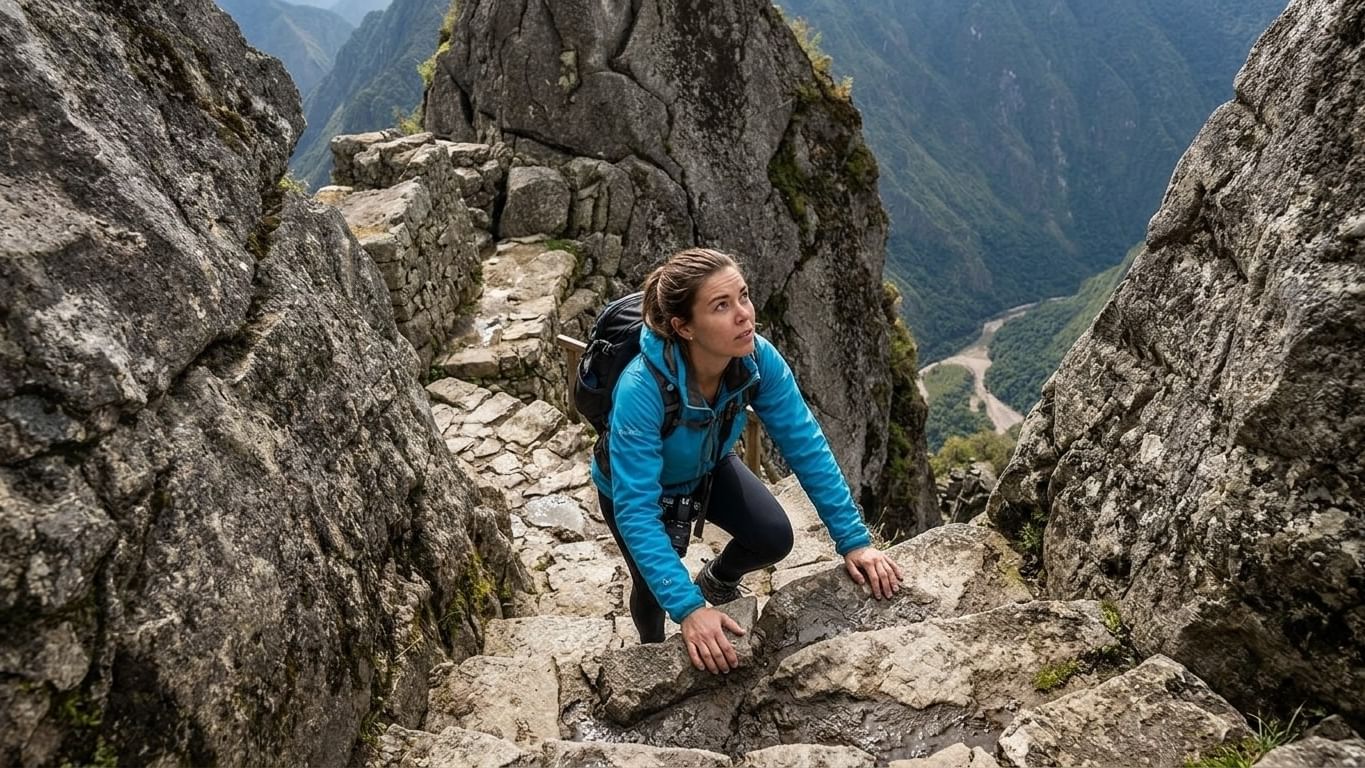
Huayna Picchu (also spelled Wayna Picchu or Huayna Picchu) is the distinctive peaked mountain that dominates the classic photographs of Machu Picchu. It appears as a small, steep cone of rock rising dramatically from the citadel's northern edge. Ascending Huayna Picchu is intense. The trail involves climbing 1,000 to 1,500 vertical feet (300 to 450 meters) in approximately one hour via a series of stone steps, many of which are extremely steep, some featuring chains bolted into the rock for handholds. The climb is narrow; two people cannot pass each other easily, creating bottlenecks during high-traffic hours. Sections are exposed, meaning the trail is narrow and drops are present; this provides thrilling scenery but demands physical comfort with exposure and focus during climbing. The descent, which most find more psychologically challenging than the ascent, takes a similar time. Total time for Huayna Picchu, including rest at the summit and descent, is typically two to three hours. The summit offers 360-degree views: Machu Picchu citadel below, the Urubamba Valley beyond, mountains in all directions, and an overwhelming sense of perspective. Many consider the Huayna Picchu summit the single best viewpoint for understanding Machu Picchu's setting.
Machu Picchu Mountain: The Gentler Alternative
Machu Picchu Mountain, sometimes called Machu Picchu Montanya or simply the Big Mountain, is a less famous but equally stunning peak accessible via a trail on the southern side of the citadel. It is larger and gentler than Huayna Picchu. The climb involves approximately 800 to 1,200 vertical feet (250 to 350 meters) over approximately 60 to 90 minutes. While definitely a climb, the grade is more moderate and the steps are less steep than Huayna Picchu. The trail is wider, allowing easier passage. There is no significant exposure, meaning the trail is not narrow with drops; it is a standard hiking trail with good footing and low risk of accident. The ascent feels less strenuous, and most hikers report the experience is enjoyable rather than grueling. The summit, at approximately 2,710 meters, offers a completely different perspective than Huayna Picchu: the citadel lies directly beneath you, but at a greater distance. Views encompass not just the central complex but the full expanse of Machu Picchu's outer structures, agricultural terraces, and residential sectors. The panorama reveals Machu Picchu's true scale and complexity in a way the closer view from Huayna Picchu cannot. Total time for Machu Picchu Mountain, including summit rest and descent, is typically two to three hours, similar to Huayna Picchu, but the experience is substantially less intense.
Head-to-Head Comparison
- Difficulty: Huayna Picchu is moderate-to-challenging. Machu Picchu Mountain is moderate. Those afraid of heights, uncomfortable with steep scrambling, or with limited fitness should choose Machu Picchu Mountain.
- Crowds: Huayna Picchu has limited daily permits (around 400) and fills quickly. Slots book out weeks in advance. Machu Picchu Mountain is less popular and easier to access. If avoiding crowds is a priority, Machu Picchu Mountain is better.
- Photography: Huayna Picchu provides the dramatic, famous Machu Picchu composition: peak in foreground with citadel beyond. Machu Picchu Mountain provides wide-angle vistas revealing full extent. Different goals suit different peaks.
- Experience: Huayna Picchu is thrilling, intense, memorable. It is often considered a defining Machu Picchu experience. Machu Picchu Mountain is rewarding, less stressful, and offers better understanding of the site's overall geography.
- Booking: Both peaks require separate tickets purchased in advance. Sunrise time slots (early morning, best light) are most popular and most scarce for both.
Can You Do Both in One Day?
Technically, yes. You can book both Huayna Picchu and Machu Picchu Mountain access and attempt both in one day. However, this is ambitious. Huayna Picchu typically runs a 7-9 AM slot and a 10 AM-12 PM slot. Machu Picchu Mountain uses different time windows. Combining both means six to eight hours of continuous hiking and climbing in a high-altitude environment. Even fit travelers find this taxing. More commonly, visitors choose one peak during their first Machu Picchu visit, then tackle the other on a subsequent trip. If you want to experience both without exhaustion, consider two trips to Machu Picchu (possible for some travelers who extend their Peru itinerary) or choose one that aligns with your priorities.
Recommendations by Traveler Type
Choose Huayna Picchu if: You are physically fit, comfortable with heights and steep terrain, seeking the iconic Machu Picchu experience, and wanting dramatic photography.
Choose Machu Picchu Mountain if: You prefer a sustained but less intense climb, want to avoid crowds, are interested in landscape and geography over dramatic peak experience, or have limited climbing experience.
Choose neither if: You prefer staying at lower elevations, have significant joint issues or mobility limitations, or came to Machu Picchu purely for the main citadel without peak climbing. Both are optional; enjoying Machu Picchu without climbing peaks is completely valid.
Frequently Asked Questions
- Which peak is better for photography? Huayna Picchu offers the most famous composition. Machu Picchu Mountain offers the most comprehensive landscape photograph. Bring a wide-angle lens to Machu Picchu Mountain and a normal lens to Huayna Picchu.
- How far in advance must I book? Book peak access at the same time you book citadel entry, typically 4 to 6 weeks beforehand for non-peak months, and as far ahead as possible during peak season.
- Can children climb these peaks? Huayna Picchu is not recommended for young children due to exposure. Machu Picchu Mountain is manageable for healthy children over about age 10.